


Modern internet infrastructure relies on the continuous exchange of data between networks, and the quality of this exchange directly affects website loading speed, cloud service stability, and the overall user experience. As traffic volumes grow, traditional routes through transit providers no longer always deliver the required performance. This is why peering has become a key element of global infrastructure: it enables networks to exchange traffic directly and significantly shorten data paths.
One of the largest and most technologically advanced platforms for such exchange is DE-CIX, which connects hundreds of operators, content platforms, and corporate networks around the world.
Peering solves several critical tasks at once. It reduces latency, improves route stability, decreases the load on external channels, and helps companies control their traffic flows. DE-CIX stands at the center of these processes, offering a platform through which massive volumes of data pass between the world’s largest networks. Thanks to its distributed architecture and advanced automation, DE-CIX peering has become one of the most effective tools for organizations seeking to improve connection quality and increase internet traffic performance.
What peering is and how it works
Peering is a mechanism for direct traffic exchange between two independent networks. It emerged as a way to reduce the number of intermediate nodes, lower latency, and increase the stability of data transmission. When networks establish a peering agreement or connect to a public exchange point, they configure a BGP-based session and begin exchanging traffic directly, bypassing transit providers.
How peering differs from transit
Transit involves an intermediary that receives traffic from one network and forwards it through its own infrastructure. Such a route may be longer and less predictable. Peering eliminates this chain of intermediaries: the exchange takes place point-to-point or through a shared peering segment. This increases control over routing and makes data transmission more efficient.
Main models of peering
- Private peering — a direct connection between two networks through a dedicated port. Suitable for networks with large and stable traffic volumes.
- Public peering — traffic exchange through an Internet exchange point where dozens or hundreds of networks are connected to a single platform. This is a flexible solution: connecting new networks takes minutes, and interaction occurs through one port.
The role of BGP in peering
BGP is the central protocol that enables networks to exchange routes. It determines how traffic should flow and helps avoid congested segments. Well-configured BGP policies optimize routes, reduce latency, and allow networks to adjust traffic priorities without modifying the physical infrastructure.
The continuous growth of internet traffic has made peering not just an additional option but an essential component of network architecture. It provides predictable performance, reduces the load on transit channels, and helps operators, content platforms, and corporate networks maintain stable service quality.
The role of DE-CIX in the global infrastructure
DE-CIX is one of the largest internet exchange platforms in the world, bringing together hundreds of networks: internet service providers, cloud operators, streaming services, corporate infrastructures, and content platforms. Its network of points of presence is distributed across key regions of Europe, the Middle East, North America, and Asia.
DE-CIX is not limited to a single physical location — it is a distributed infrastructure that unites multiple data centers into a single logical environment. This approach eliminates congestion points typical of centralized IXs and increases overall resilience. Traffic can be redistributed dynamically across nodes, giving engineering teams additional flexibility in routing configuration.
Resilience and high availability
High availability is one of the key criteria for network operators. DE-CIX uses redundancy at every level: from network connections and routers to inter-data-center links. This reduces the risk of disruptions, even during significant peak loads or technical incidents. For companies operating 24/7, such stability is essential.
The platform actively employs automated configuration mechanisms: customers can create peering sessions, modify port parameters, and enable additional services within minutes. This is especially important in environments where traffic grows unpredictably and engineers must react quickly to shifting loads. Automation reduces operational costs and minimizes the risk of human error.
Why DE-CIX has become a strategic hub
The combination of scale, distributed architecture, automation, and strong resilience has made DE-CIX a standard platform for companies requiring predictable performance. The more networks connect to the platform, the more valuable peering becomes: routing improves, latency decreases, and overall service quality grows for all participants. DE-CIX effectively forms a foundational layer of the internet, carrying a significant share of regional and global traffic.
How peering works on DE-CIX

Connecting to DE-CIX begins with choosing a point of presence and a port through which the network will exchange traffic. A customer connects to one of the platform’s data centers, receives a dedicated port, and configures basic network connectivity. After that, the network becomes part of the shared peering environment, where many other operators and services are available.
Public peering via VLAN and route servers
Public peering is implemented through a shared VLAN to which hundreds of networks are connected. To simplify interaction, route servers are used — specialized services that accept BGP sessions from participants and distribute routes between them. This makes it possible to:
- avoid configuring individual BGP sessions with every network;
- quickly gain access to all participants in the public segment;
- centrally manage routing filters.
Route servers significantly accelerate the integration of new operators and reduce the workload on engineers. This is one of the reasons why DE-CIX has become such a large-scale peering hub.
Private peering via dedicated connections
If a large volume of traffic flows between two networks, they can establish a private peering session. In this case, a separate connection is created (usually a dedicated VLAN or a separate port), isolating the exchange from other participants. Private peering is suitable for operators, CDN networks, streaming platforms, and large corporate infrastructures where constant data flows require maximum stability.
BGP configuration and route management
After connecting to the platform, a network establishes one or several BGP sessions — either with route servers or directly with peering partners. At the level of BGP policies, a participant can:
- set route priorities;
- restrict or expand prefix announcements;
- define rules for outgoing and incoming traffic;
- manage load balancing.
These mechanisms enable fine-tuned performance optimization and provide flexibility when network topology changes.
Services that enhance traffic exchange
DE-CIX offers additional tools that extend the basic capabilities of peering. These include services for route optimization, connectivity to cloud platforms, DDoS protection, and solutions that improve redundancy. All of this helps operators build a more stable and efficient infrastructure on top of the shared peering layer.
The platform combines public and private peering, automation, large-scale infrastructure, and flexible routing controls. This approach provides participants with predictable connection quality, high availability, and the ability to quickly adapt to growing traffic.
Why DE-CIX increases internet traffic efficiency
When traffic passes through intermediaries, the route becomes longer and latency increases. Peering on the platform shortens the path to nearby networks and services because the exchange occurs directly. Fewer hops mean lower latency. This is especially noticeable with streaming, gaming platforms, cloud services, and interactive applications where latency is critical to the user experience.
Routing optimization and elimination of bottlenecks
Routes on the public internet are not always optimal: traffic may travel along indirect paths through overloaded nodes. Peering allows networks to determine on their own how data should be routed. Using BGP policies, participants can set priorities, avoid congested segments, and balance load. The result is more predictable and consistent performance, even during peak demand.
Transit remains an important part of global infrastructure, but it also creates excessive dependence on external routes. Direct peering reduces the amount of traffic passing through third-party providers and allows a network to control key exchange directions. This increases stability, improves manageability, and reduces the risk of unexpected delays.
Increased availability and network resilience
Thanks to its distributed architecture, the peering platform provides a high level of redundancy. If one node experiences load or technical limitations, traffic can be redirected through other points of the infrastructure. For operators and large-scale services, this ensures stable operation even with significant data volumes or during network events.
Improved routes, reduced latency, and greater resilience lead to the main advantage — stable connection quality. This is particularly noticeable for:
- streaming services, where buffering decreases;
- gaming platforms, where minimal latency is essential;
- SaaS solutions, which require fast application response;
- corporate systems using VPN and cloud storage.
The closer and more direct the connection between the user and the service, the higher the overall quality of the interaction.
Real-world use cases
Streaming platforms and high-resolution video
Streaming is especially sensitive to latency and unstable routes. When delivering 4K video or real-time broadcasts, any node congestion leads to buffering and reduced quality. Connecting to a peering platform shortens the path from the content provider to the end user by enabling direct exchange with access providers. These optimized routes make the stream more stable and allow heavy video content to be delivered without quality fluctuations.
Cloud services and corporate applications
Companies using distributed cloud solutions face the challenge of providing fast access to applications across different regions. With peering, traffic can follow shorter routes, and BGP logic allows flexible control of inbound and outbound flows. This reduces latency when working with CRM, ERP, file storage systems, and analytics platforms. For users, it means faster interface loading and a stable connection even under high workloads.
Gaming platforms and interactive applications
Real-time games, game streaming, and instant-response services require the lowest possible latency. Direct peering reduces the distance between game servers and provider networks, lowering ping and improving connection stability. This is especially important for esports projects and large gaming platforms where fractions of a second play a decisive role.
Content delivery (CDN) and distributed infrastructures
CDNs operate by placing content closer to the user. Peering amplifies this effect by providing direct connections between CDNs and access providers. This accelerates website loading, reduces the time required to retrieve resources, and makes web applications more responsive. The improvement is particularly noticeable when delivering static files, images, large archives, and resources from high-traffic websites.
Corporate networks, VPN, and inter-office connections
Organizations that use VPNs or connect offices across multiple cities benefit from peering thanks to more predictable routes. Reduced latency improves the quality of encrypted tunnels, speeds up data transfer, and increases the stability of internal systems. This is critical for companies where employees work within a unified digital environment and depend on centralized services.
IoT systems and streaming telemetry
Internet of Things devices generate a constant stream of data, requiring reliable and efficient delivery to processing platforms. Peering reduces the likelihood of delays and packet loss, which is crucial for monitoring systems, transportation networks, energy infrastructure, and industrial automation. Clear and optimized routing helps such systems operate without interruption.
How companies connect to DE-CIX
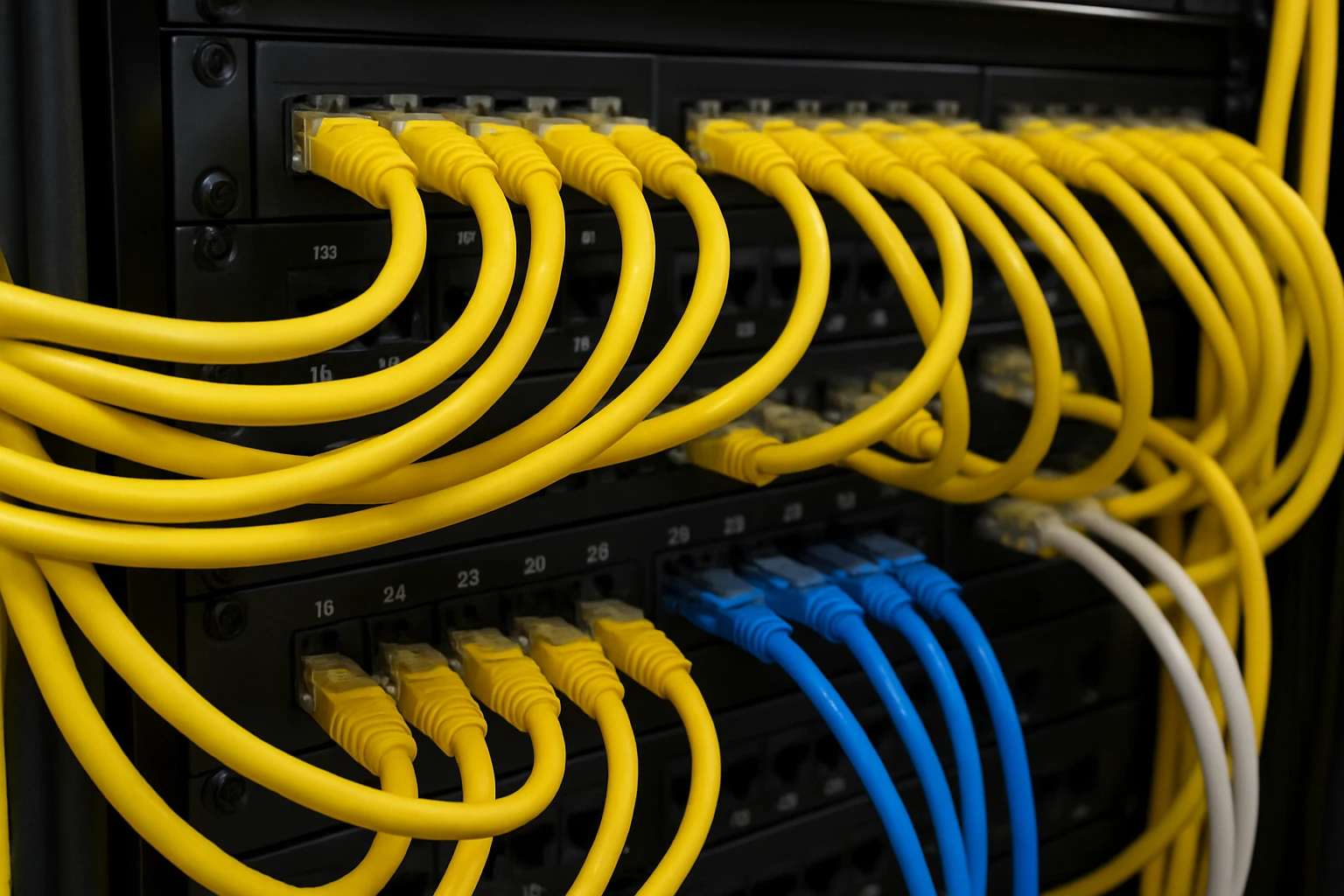
The first step is to determine the nearest or most convenient platform node. DE-CIX is available in numerous data centers, allowing companies to choose the optimal location based on their network architecture and traffic distribution. After selecting a point of presence, the operator receives a connection port, which becomes the foundation for exchanging data with other participants on the platform.
A company can connect to DE-CIX in two ways:
- Direct connection — suitable for networks operating in a data center where the platform is present. This ensures minimal latency and full control over connection parameters.
- Remote peering via partners — an option for companies located in regions without local DE-CIX presence. In this case, specialized partners provide access to the platform through their own channels. This approach expands the geographic reach of peering without requiring the deployment of additional infrastructure.
Infrastructure preparation and technical requirements
To connect, basic network equipment is required that supports high-speed interfaces (typically from 1 to 100 Gbit/s) and standard routing mechanisms. After establishing the physical link, the operator receives port parameters and can configure a VLAN or a dedicated connection. At this stage, it is important to ensure proper channel operation and that the equipment is ready to establish BGP sessions.
BGP session configuration
After connecting to the platform, the company configures BGP — the main protocol for route exchange. It is necessary to:
- establish a BGP session with route servers if public peering is used;
- configure direct BGP sessions with specific participants if private peering is planned;
- define prefix announcement policies;
- set routing rules for inbound and outbound traffic.
BGP provides flexibility, enabling control over traffic direction, load management, and route optimization.
Additional services and extended capabilities
After the basic connection is established, a company can enable additional services offered by the platform. These include:
- connectivity to cloud platforms through dedicated channels;
- services for route optimization;
- solutions to improve connection reliability;
- security tools designed to prevent network attacks.
These capabilities turn the platform into a full-featured traffic exchange management center.
The connection process as a whole
Connecting to DE-CIX is a clear sequence of steps: choosing a location, obtaining a port, configuring equipment, establishing BGP sessions, and integrating additional services. As a result, a company gains access to a large ecosystem of networks, improves routing, and increases the efficiency of internet traffic handling.
Why the role of DE-CIX will continue to grow
The DE-CIX platform plays a central role in the internet ecosystem of Europe. Thanks to its large-scale and distributed architecture, it connects hundreds of networks and creates the conditions for highly efficient data exchange. Automation, flexible BGP policies, and the integration of additional services allow participants to quickly adapt to changing traffic patterns and manage routing according to business needs.
The growth of internet traffic, along with the development of cloud computing, streaming, IoT, and edge solutions, makes peering even more relevant. Companies seek to improve performance, reduce latency, and increase network resilience — and DE-CIX is becoming one of the most effective ways to achieve these goals. The platform helps optimize resources, reduce costs, and maintain stable operation of digital services in an increasingly complex network environment.
As a result, peering at DE-CIX not only accelerates data transmission but also enhances the overall efficiency of network infrastructure. It is becoming a foundational layer for modern digital services and an essential component of the internet architecture of the future.
Discover more from Life and Tech Shots Magazine
Subscribe to get the latest posts sent to your email.