

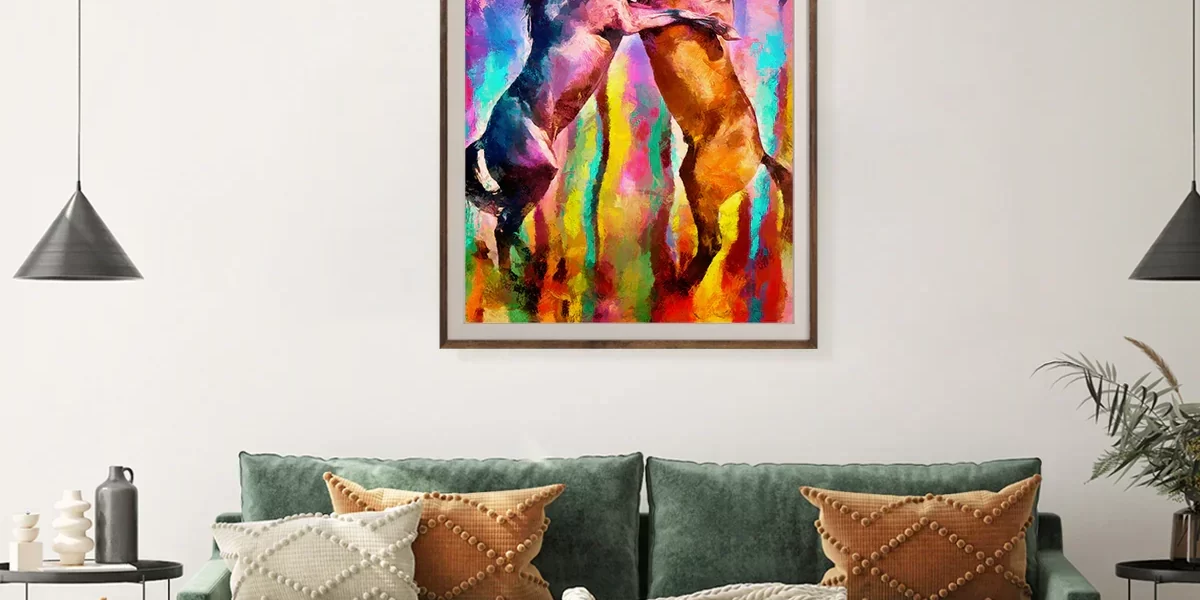
A calm, beautiful home often starts with what you choose to see first: your walls. Beyond paint and texture, wall art sets tone, rhythm, and emotion. It can ground a room, open up visual space, and weave a quiet narrative that makes interiors feel alive yet harmonious. When nature becomes your muse—horses in motion, birds in flight, butterflies in stillness—the result is something timeless. The key lies in sequencing: start with grounded movement, build lightness, then finish with color and delicacy.
1. Movement and Calm — The Horse Element
Every well-composed interior needs an anchor—something that establishes structure and calm while hinting at motion. This is where horse posters for walls excel. Horses symbolize grace, balance, and strength—qualities that translate beautifully into interior design. Their silhouettes introduce quiet movement without visual clutter, offering a sense of fluidity ideal for living rooms, hallways, or home offices.
When selecting equestrian artwork, align the tone of your imagery with your palette: warm sepias and chestnut hues blend naturally with oak floors, tan leather, or brass fixtures; cooler monochromes complement slate, steel, and minimalist architecture. For proportion, let the artwork occupy roughly two-thirds of the width of the furniture beneath it, and keep its midpoint around 145 cm from the floor—eye level for most spaces.
To build visual harmony, maintain a consistent frame style throughout (black for contemporary, oak for mid-century, white for coastal or Scandinavian). If displaying more than one piece, keep 5–8 cm between frames for comfortable breathing room. A portrait layout elongates narrow walls, landscape balances wide stretches, and square compositions center the eye. Horses embody quiet power; use them as your design’s grounding note.
2. Lightness and Vertical Rhythm — The Bird Element
Once the foundation of movement and calm is set, the next step is introducing air and rhythm. Nothing captures that upward energy better than bird prints & posters. Birds offer an effortless sense of lightness—feathers, wings, and perched forms that give interiors lift and vertical continuity. Where the horse art steadies the room, bird art lets it breathe.
Bird imagery works well in transition zones—above desks, reading nooks, or shelves where you want visual space without visual noise. In neutral rooms, subtle color cues—a flash of teal, ochre, or gold from a feather—can link to small accessories like cushions, ceramics, or a single vase. Choose perched silhouettes for quiet corners, or flight scenes for hallways and stairwells where upward motion naturally suits the eye.
Paper finish also matters: matte reduces glare in sunlit areas, while satin offers a soft sheen under lamplight. When curating a series, align centers perfectly and repeat one frame tone throughout. Grouping three similar tones (for instance, cream, sage, and gray) can create a cohesive palette that feels curated rather than cluttered. Birds bring in not just imagery, but rhythm—the gentle cadence your eyes follow from one piece to another.
3. Delicacy and Color Balance — The Butterfly Element
To complete the natural progression, layer in refined color and visual delicacy with butterfly posters for home décor. Butterflies carry both stillness and subtle vibrancy, making them ideal for final accents that harmonize a room’s color story. Their wings—symmetrical yet fragile—offer graphic interest and a measured burst of pigment that ties everything together.
For modern interiors, minimalist or geometric butterfly prints lend elegance without nostalgia. In contrast, vintage botanical plates pair gracefully with cottage, bohemian, or art-nouveau aesthetics. Consider echoing your textile accents: cobalt wings can mirror a throw, rust tones can repeat in pottery, and sage can soften alongside linen curtains.
Placement should be deliberate but light-handed. Over a console or dresser, a single square butterfly print feels poised and centered. In hallways or narrow zones, a vertical trio with equal spacing offers tidy rhythm and height. To maintain balance, repeat the same frame finish and let the butterflies provide the only color variation. Their delicacy invites the eye to rest—an essential counterpoint to the strength of equestrian pieces and the motion of birds.
Final Thought: Nature as a Living Design Language
Bringing nature indoors doesn’t mean filling your walls with literal landscapes—it’s about translating movement, weight, and hue into visual balance. Horses provide grounded energy; birds lift that energy upward; butterflies refine it into artful stillness. Together, they compose a visual symphony of motion, air, and color.
When done right, your walls won’t just display images—they’ll tell a quiet, living story of grace and connection. That’s the essence of timeless décor: it breathes with you.
Discover more from Life and Tech Shots Magazine
Subscribe to get the latest posts sent to your email.