

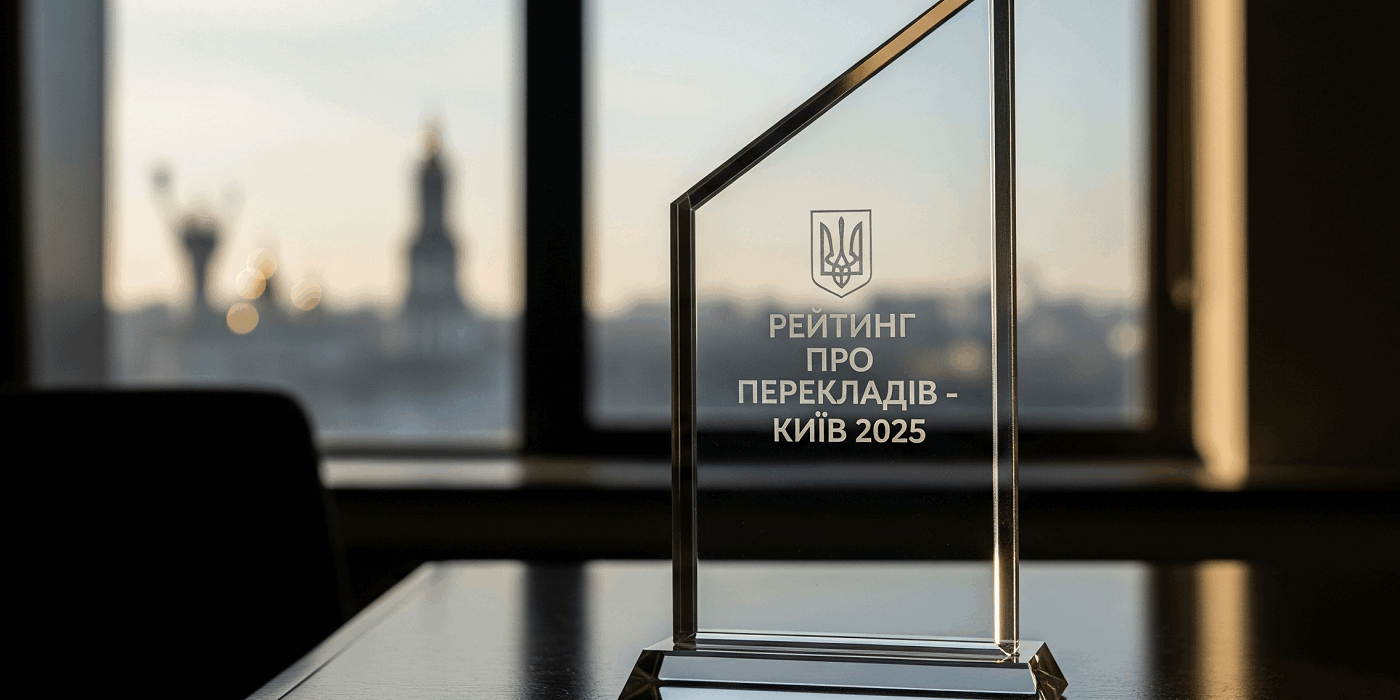
In a business landscape defined by unprecedented challenges, the professional service sector in Kyiv has become a case study in fortitude. While the war has disrupted traditional commerce, one specific industry has not only survived but evolved to become a critical infrastructure for global communication: the translation bureau.
Agencies in the Ukrainian capital, such as Mova Club translation agency, are doing more than just keeping the lights on; they are redefining what reliability looks like in a crisis, serving as a vital bridge between Ukraine and the world.
Unwavering Standards in a Volatile Environment
For professional service providers, trust is the currency of trade. In the translation industry, trust is built on three pillars: quality, punctuality, and accuracy. Despite the external pressures of air raids and logistical hurdles, Kyiv-based agencies like Mova Club have steadfastly refused to compromise on these metrics.
The core philosophy remains that the client must receive a high-quality product at a competitive price, regardless of the geopolitical context. This resilience is driven by two main factors:
- Human Capital: The sector relies on a community of linguists who are not only skilled but deeply motivated. For many, maintaining professional excellence is a form of psychological armor—a way to assert control and normalcy amidst chaos.
- Rigorous Quality Control: Agencies have doubled down on multi-tiered review processes. A standard workflow now strictly enforces a chain of translation → proofreading → final revision. This ensures that every deliverable is contextually accurate and error-free, safeguarding the agency’s reputation even in turbulent times.
Operational Agility: Adapting to the New Reality
How do you run a deadline-driven business when the power grid is unstable? Kyiv’s translation agencies have answered this question with extreme operational agility. The “office” has transformed from a physical location into a decentralized, resilient network.
The Logistics of Resistance
To ensure business continuity, agencies have implemented several key pivots:
- Decentralization: Leveraging cloud infrastructure, agencies have moved to a fully distributed workforce model. Project managers and linguists collaborate seamlessly whether they are in Kyiv, western Ukraine, or abroad.
- Energy Independence: To combat power outages, businesses have invested heavily in hardware resilience, utilizing generators and high-capacity batteries to keep servers and workstations running.
- Digital Transformation: With physical movements sometimes restricted, agencies have moved services online. Secure portals now handle document submission and the delivery of certified translations, replacing the need for in-person visits.
Note: This flexibility mitigates the risk of localized disruptions, ensuring that a crisis in one district does not halt operations for the entire agency.
A Shifting Landscape of Demand
The war has fundamentally altered what needs to be translated, reflecting the changing needs of the Ukrainian nation and its economy.
1. The Surge in Official Documentation
Displacement has driven a massive requirement for certified translations of personal documents. Birth certificates, marriage licenses, and diplomas are essential for Ukrainians moving abroad, creating a constant stream of work for certified legal translators.
2. Military and Humanitarian Aid
As international support flows into Ukraine, the language barrier must be bridged immediately. There is a critical, high-stakes demand for translating:
- Technical manuals for military equipment.
- Medical records for treatment abroad.
- Official correspondence regarding humanitarian logistics.
3. The “Ukrainization” of Business
Perhaps the most profound shift is cultural. As national identity strengthens, there is a booming demand for localization into Ukrainian. Businesses are prioritizing the state language for their websites, marketing, and internal communications.
Simultaneously, the market has seen a rise in standalone editorial and proofreading services. Ukrainian companies expanding globally require polished, error-free English content to compete internationally. Conversely, domestic entities are seeking expert editors to refine Ukrainian content, ensuring clarity and stylistic precision. This indicates a broader trend toward the professionalization of all corporate communications.
Conclusion: A Partnership of Solidarity
The continued operation of Kyiv’s translation bureaus is a quiet but powerful act of economic resistance. By maintaining high standards and adapting to the harsh realities of war, firms like Mova Club demonstrate that Ukrainian enterprise is not merely surviving—it is persisting with dignity.
For international clients, engaging a Kyiv-based agency is no longer just a charity case or a moral stance; it is a sound business decision. It offers access to a workforce that has proven it can deliver excellence under the most demanding circumstances imaginable.
Discover more from Life and Tech Shots Magazine
Subscribe to get the latest posts sent to your email.