

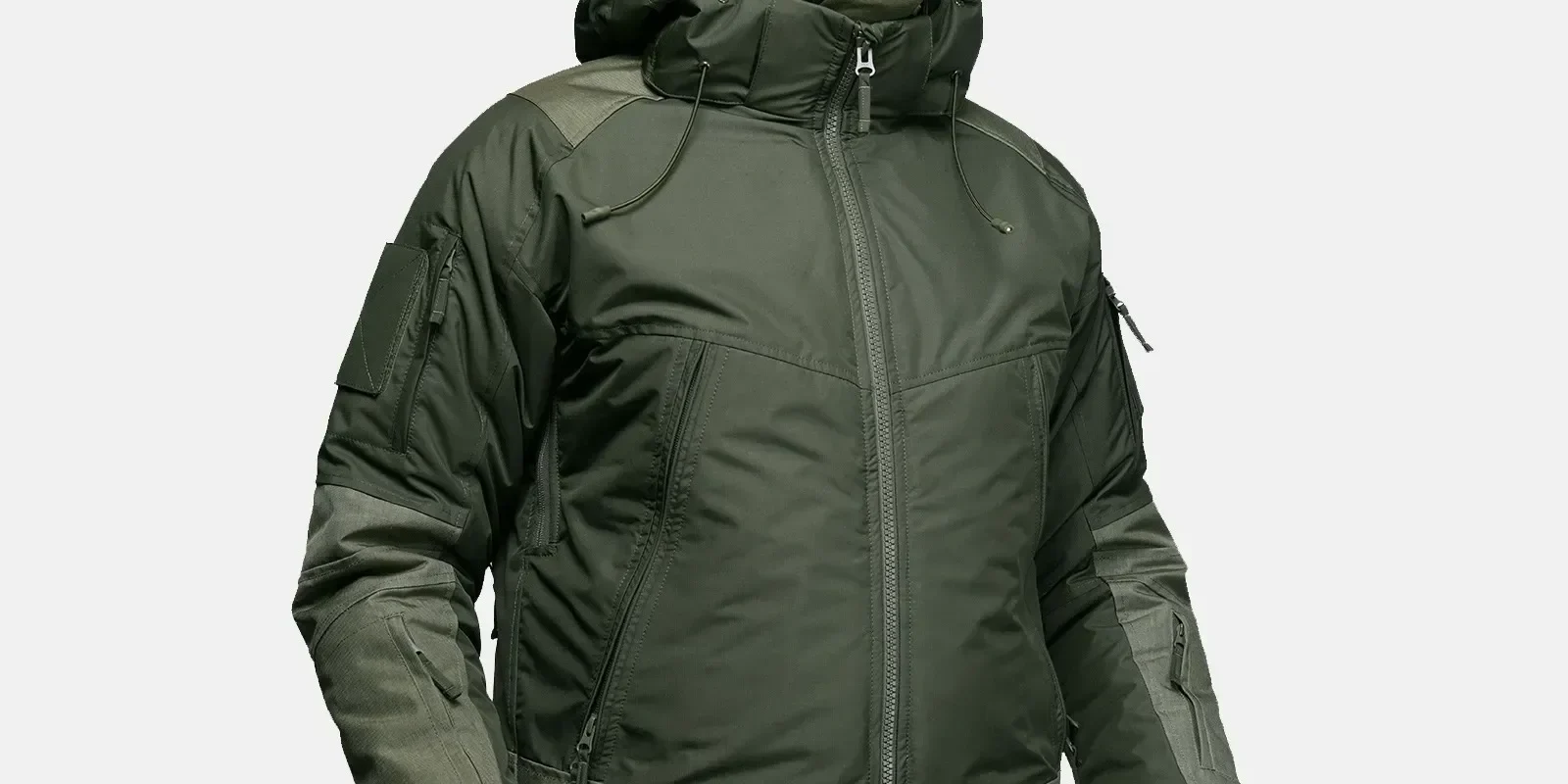
Winter Tactical Jacket Guide: Insulation, Shell and Fit
A winter tactical jacket has to deliver three things: insulation that keeps working when damp (Climashield APEX at 100–136 gsm is the benchmark), a wind- and waterproof shell (Ripstop or a membrane from 10,000 mm), and a cut compatible with body armor and gear. Here is how to judge each.
Insulation: the deciding factor
In winter field conditions clothing is never fully dry — sweat, snow, condensation. What matters is not grams on a label but how insulation performs wet. Continuous-filament synthetics like Climashield APEX retain warmth when damp, dry quickly and hold their loft through repeated washing — unlike cheap polyester batting or down.
Weight guide: 100 gsm covers a standard active winter; 136 gsm is for hard frost and static tasks such as observation posts. The same insulation is fielded in cold-weather programs of the US Army and several NATO militaries — and in Ukraine it has been validated by four winters of full-scale war.
Shell fabric: Ripstop or membrane
| Shell | Moisture protection | Breathability | Best for |
|---|---|---|---|
| Ripstop weave | Water-repellent, dry cold | Highest | Active tasks, dry regions |
| Membrane 10,000/5,000 | Rain, wet snow | Good | Wet winters, value pick |
| Membrane 10,000/10,000 (Nylon 6.6) | Prolonged precipitation | Very good | High-tempo duty in wet cold |
| Membrane 20,000/10,000 | Maximum | Good | Extreme exposure |
Cut and details that matter in the field
Check for: a removable hood adjustable in two planes; mesh-backed side ventilation zippers to dump heat under load; fleece-lined hand pockets; loop panels for patches; CORDURA 500D reinforcement in wear zones and YKK zippers. Ukrainian manufacturer UATAC builds its winter line exactly to this logic, refined from frontline feedback — see the winter tactical jackets collection.
FAQ
What is the best insulation for a winter tactical jacket?
Continuous-filament synthetic insulation such as Climashield APEX keeps insulating when damp, dries fast and survives repeated washing. For active winter duty 100 gsm is the standard; for hard frost and static tasks choose 136 gsm.
What do membrane ratings like 10,000/10,000 mean?
The first number is waterproofness in mm of water column, the second is breathability in g/m² per 24 hours. A 10,000/10,000 shell handles prolonged sleet and rain while venting sweat on the move; 20,000/10,000 versions exist for extreme exposure.
Synthetic insulation or down for military use?
Down is warmer per gram but collapses when wet and needs delicate care. APEX-type synthetics insulate while damp, tolerate mud, sweat and frequent washing, and need no baffles. For field conditions synthetic is the practical choice.
Does a winter tactical jacket fit over body armor?
An insulated winter jacket is typically worn over the plate carrier during static tasks and movements. Look for a roomy cut, mesh-backed side vents and two-way waist adjustment so the silhouette adapts to gear underneath.
Ripstop or membrane shell — which winter jacket to pick?
Ripstop is lighter, quieter and more breathable — best for active tasks in dry cold. A membrane from 10,000 mm protects in wet snow and freezing rain. In wet-winter regions the membrane version is the safer pick.
Where does a winter jacket sit in the ECWCS layering system?
An insulated winter jacket performs the Level 7 role of ECWCS: the warmest outer layer for frost and static positions. Base layer and fleece work underneath; on the move it comes off to prevent overheating.
Discover more from Life and Tech Shots Magazine
Subscribe to get the latest posts sent to your email.