

Time looks simple until people in different cities, countries, or continents need to coordinate something. A meeting scheduled for 10:00 may happen in the morning for one person, late in the afternoon for another, and during the night for someone else. Add daylight saving time, regional exceptions, and calendar dates that change across the International Date Line, and a basic time calculation can quickly become unreliable.
This is why checking accurate local time matters. It helps people avoid missed calls, incorrect booking times, late market orders, and confusion around international events. It is useful not only for travelers or global companies, but also for freelancers, students, online shoppers, investors, sports fans, and anyone who communicates across borders.
World Time Data brings together current time information, time-zone guidance, and practical resources for understanding how time works around the world. Instead of relying on rough calculations or outdated assumptions, users can check current data for the location they actually need.
Why Local Time Is More Complicated Than It Seems
Most people think of time differences as fixed. If one city is six hours ahead of another today, it may seem reasonable to assume that the same difference will apply next month. In reality, that is not always true.
Some countries change their clocks during the year, while others keep the same time permanently. Even among countries that use daylight saving time, the change may happen on different dates. For a few weeks in spring or autumn, the usual difference between two locations can become one hour shorter or longer.
There are also places with unusual UTC offsets. Not every time zone is separated by a whole hour. Some regions use offsets of 30 or 45 minutes, which makes mental calculations less reliable. A person who assumes that every location follows a simple hourly pattern can easily schedule something at the wrong time.
Political decisions create another layer of complexity. Governments may change time-zone rules, stop using daylight saving time, or move a region to a different standard offset. Old articles, screenshots, and saved notes can therefore become inaccurate even if they were correct when they were written.
The safest approach is to check the current local time rather than relying on memory. This is especially important when the event is time-sensitive or difficult to reschedule.
International Meetings and Remote Work
Remote work has made time-zone awareness part of normal business communication. A team may include people in Europe, North America, Asia, and Australia, all working within different local schedules. Choosing a meeting time without checking each location can create an unfair or impractical schedule.
For example, 3:00 PM in London may be a reasonable working hour for someone in New York, but it may already be late evening in parts of Asia. When several locations are involved, the best time is not always obvious.
A reliable planning process starts with the actual local time in every participant’s city. It is better to compare specific locations than to write only broad labels such as European time or American time. Europe covers several time zones, and the United States has multiple major zones even before including Alaska, Hawaii, and overseas territories.
It also helps to include the time zone directly in invitations. Writing “10:00 AM” alone leaves room for error. Writing “10:00 AM CET” or including the corresponding UTC time gives participants a clearer reference. For important meetings, both the local time and the calendar date should be checked, because participants in distant regions may already be on the next day.
Accurate time information is particularly valuable for freelancers and agencies working with international clients. Missing a call because of a time-zone mistake can damage trust, while a consistent scheduling process makes communication feel more professional and dependable.
Travel Planning Across Time Zones
Travel is another area where local time affects more than the clock on a phone. Flight departure and arrival times are normally shown in the local time of each airport. A journey that appears to last only a few hours on the schedule may actually be much longer once the time difference is considered.
This matters when booking connecting flights, airport transfers, hotels, rental cars, and train tickets. A traveler may arrive on a different calendar day, even when the flight departed only several hours earlier. Long-distance routes can also cross the International Date Line, making the arrival date look surprising at first glance.
Checking the destination time before departure helps with practical planning. It shows whether local businesses will still be open, whether public transport will be running, and whether it is a suitable hour to contact a hotel or host.
It can also make jet lag easier to manage. Travelers often begin adjusting their sleeping schedule before a long trip. Knowing the exact time at the destination makes it easier to plan sleep, meals, and exposure to daylight in a more deliberate way.
For people meeting someone at the airport, accurate time is just as important. The time displayed on a ticket may not match the time where the person waiting is located. Checking both locations avoids unnecessary confusion.
Financial Markets and Time-Sensitive Decisions
Financial activity is closely tied to time. Stock exchanges, commodity markets, economic releases, earnings calls, and central bank announcements all operate according to specific schedules. A trader who converts those times incorrectly can miss the most active part of a session or react too late to important news.
Market hours are often published in the local time of the exchange. The New York Stock Exchange, London Stock Exchange, Tokyo Stock Exchange, and other major markets do not open and close at the same universal hour. Their schedules also overlap differently depending on the season.
Daylight saving time can temporarily change the relationship between financial centers. For example, the usual time gap between Europe and the United States may differ during the weeks when one region has already changed its clocks and the other has not.
This is relevant not only for professional traders. People who follow economic reports, invest through international brokers, or watch company earnings may also need to convert release times correctly. A single-hour mistake can mean missing a live announcement or placing an order under different market conditions than expected.
Using current time data is more reliable than saving a permanent conversion in a spreadsheet or note. Static calculations can become wrong when seasonal changes begin.
Live Events, Sports, Webinars, and Online Broadcasts
International events are often announced in the organizer’s local time. This applies to sports matches, product launches, conferences, webinars, live streams, online lessons, and entertainment broadcasts.
Fans commonly see a start time in ET, PT, GMT, CET, or another abbreviation. These labels are useful, but they can be misunderstood. Some abbreviations are used for more than one time zone, while others change depending on whether standard time or daylight saving time is active.
It is safer to verify the time for a specific city rather than relying only on an abbreviation. A city-based search reduces ambiguity and gives a result that reflects the current seasonal rules.
Calendar dates should also be checked. A live event held on Friday evening in the United States may begin early on Saturday morning in Europe or Asia. Without checking the date as well as the hour, viewers can easily look for the broadcast on the wrong day.
This is one reason current time services are useful even when a phone or computer already shows local time. A device tells the user what time it is nearby, but not necessarily what time it is where the event is taking place.
Practical Tools for Work, Study, and Daily Tasks
Time management is not limited to clocks and time zones. Many everyday activities depend on measuring duration rather than checking the current hour. Timers and stopwatches are simple tools, but they can make work and planning more structured.
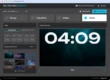
The online time tools section provides practical functions that can be used directly in a browser. This is useful when a user needs a quick tool without installing another application or creating an account.
A timer counts down from a chosen duration. It works well for focused work sessions, cooking, exercise, study periods, presentations, breaks, and repetitive tasks. The main advantage is that the user does not need to keep checking the clock. The timer provides a clear endpoint.
A stopwatch measures how much time has passed. It is better suited to activities where the final duration is not known in advance. People can use it to track a run, measure the length of a task, compare repeated attempts, test loading times, or record how long a process takes.
These tools may appear basic, but they are often more effective than complicated productivity systems. A clearly defined 25-minute work session, for example, can make it easier to begin a task that feels too large. Measuring the real duration of routine work can also reveal where time is being lost.
Using Timers Without Turning Productivity Into Pressure
Time tools are useful when they support concentration, not when they create constant stress. Measuring every minute of the day is rarely necessary. A timer works best when it gives a task a clear boundary or helps protect time from distractions.
One practical approach is to choose a single task and work on it for a fixed period without switching tabs, checking messages, or opening unrelated applications. When the timer ends, the user can decide whether to continue or take a short break.
For study, timed sessions help maintain attention and make revision more manageable. Instead of planning to study an entire subject, a student can focus on one chapter or exercise set for a specific period.
For physical training, timers are useful for intervals, rest periods, stretching, and circuit exercises. A stopwatch is more suitable when the aim is to record performance rather than follow a countdown.
The tool should match the task. A timer creates a deadline, while a stopwatch records reality. Using the wrong one can make the process less convenient.
Why Time-Zone Abbreviations Can Be Misleading
Time-zone abbreviations are common because they are short, but they are not always precise. The same abbreviation may refer to different regions, and some users confuse standard time with daylight time.
For example, EST and EDT are not interchangeable. EST refers to Eastern Standard Time, while EDT refers to Eastern Daylight Time. The difference between them is one hour. Using the wrong abbreviation can lead to incorrect scheduling.
Generic labels such as ET are broader because they refer to Eastern Time without specifying whether standard or daylight time is active. That can be convenient in conversation, but a precise event listing should still include a city, UTC offset, or automatically converted local time.
IANA time-zone names such as America/New_York or Europe/London are more reliable in technical systems because they represent a location and include its historical and seasonal rules. They are commonly used in software, databases, calendars, and scheduling platforms.
For regular users, there is no need to memorize technical identifiers. The important point is to avoid assuming that every abbreviation has one universal meaning.
Common Time-Conversion Mistakes
One of the most common mistakes is adding or subtracting a fixed number of hours without checking whether the offset has changed. This method may work for most of the year and then fail during a daylight saving transition.
Another mistake is forgetting the date. When converting time between distant locations, the result may fall on the previous or next calendar day. This is especially common with calls between North America, Asia, and Oceania.
People also sometimes use the time zone of a country’s capital for the entire country. This is unsafe for large countries such as the United States, Canada, Australia, Brazil, Russia, and Mexico, where different regions may follow different time zones.
A fourth mistake is relying on old search results or saved images. Time-zone rules can change, and a screenshot does not update itself. Current data should be checked for important events.
Finally, device settings can create problems. A laptop or phone may display the wrong time if automatic time-zone detection is disabled, the device location is inaccurate, or the user manually selected the wrong region.
A Better Way to Schedule Across Countries
A simple process can prevent most time-related errors. Start by identifying the exact cities involved. Check the current local time in each location and confirm the UTC offset. Then compare the intended meeting hour with normal working hours for all participants.
For future events, check whether a daylight saving change will happen before the scheduled date. The current time difference may not be the same when the meeting takes place.
After choosing a time, include the time zone in the invitation and send the event through a calendar system that automatically converts it for each participant. For high-value meetings, write the converted times in the message as an additional confirmation.
This approach takes only a few minutes and is much safer than assuming everyone will interpret the time correctly.
Why Browser-Based Time Tools Are Still Useful
Most phones already include a clock, timer, and stopwatch. Even so, browser-based tools remain useful in several situations.
They are accessible on different devices without setup. A person can open them on a work computer, shared laptop, tablet, or phone without installing software. They are also convenient when the built-in clock application is restricted, difficult to find, or already being used for another task.
A browser tool can also keep a timer visible next to a document, video, dashboard, or online lesson. This is useful for people who work mainly on a computer and do not want to switch between devices.
For international time checks, a dedicated website provides more context than a basic clock application. Users can explore locations, compare time zones, and understand why two cities may not keep the same difference throughout the year.
Accurate Time as a Small but Important Part of Planning
Time errors are usually avoidable. They happen not because the information is unavailable, but because people rely on assumptions, old conversions, or vague time-zone labels.
Checking current local time takes little effort, yet it can prevent missed meetings, incorrect travel plans, late event attendance, and poorly timed financial decisions. Timers and stopwatches add another layer of control by helping users measure duration, protect focus, and organize everyday activities.
A dependable resource such as World Time Data makes these tasks easier by combining global time information with practical tools in one place. Whether the goal is to coordinate an international call, prepare for a journey, follow a live event, or manage a focused work session, accurate time data provides a clearer basis for planning.
Time may be universal, but the way it is measured and displayed depends on location, season, and local rules. Understanding those differences makes international communication simpler and everyday planning more reliable.
Discover more from Life and Tech Shots Magazine
Subscribe to get the latest posts sent to your email.