

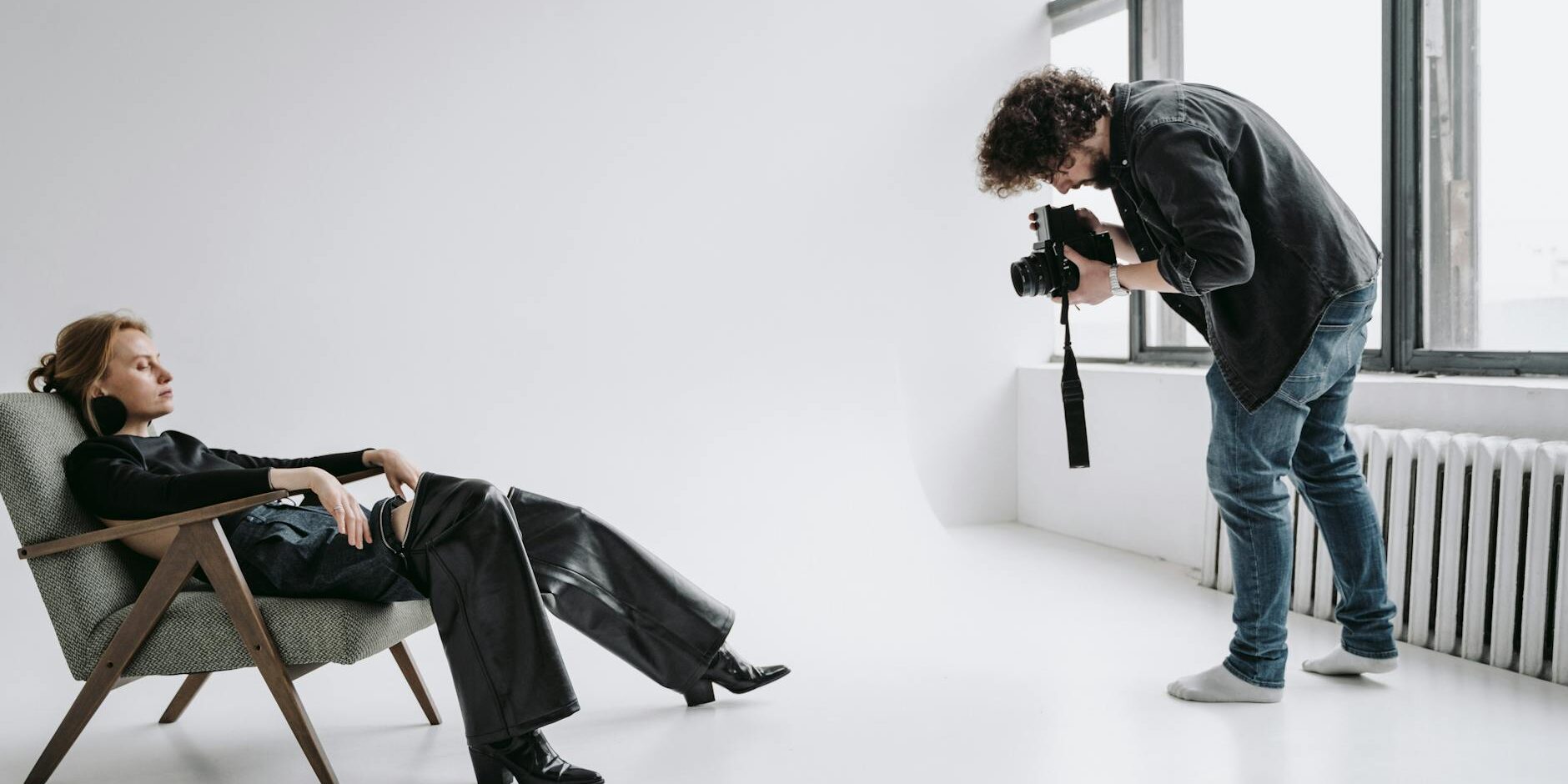
The Israeli photographer candidly discusses Colorado that never opened, the iPhone he uses (but not for weddings), Kaliningrad that still hasn’t launched, and what it means to work when orders are down 70-80% after two and a half years of war
Stas Muzikov is one of the most discussed photographers in the Russian-speaking world. Articles are written about him, his projects are analyzed, his statements are quoted. But he rarely gives interviews. This time, we talked about everything: the big announcements from 2023 that never materialized, projects currently in development, and what it means to run a business in a country where war has become part of daily life.
— Stas, let’s start with the main question everyone’s asking: what happened to Colorado? Three years ago, in 2023, you announced opening a branch in the United States. Enough time has passed to understand – it’s not happening?
— Yes, it’s not happening. And I can speak openly about it now.
Three years ago, Colorado was in the plans. I studied the market, looked at logistics, consulted with lawyers about visas and legally opening a business.
But the deeper I dove into details, the clearer it became: this requires completely different investments than I had calculated. Not just money—time, presence, building a network from scratch. The American market is structured so that it’s not enough to simply be a good photographer. You need local reputation, recommendations, presence in the right circles.
I made the decision not to pursue this project back in 2024, but didn’t announce it publicly then. Now I can say honestly: Colorado won’t happen.
And yes, I admit: announcing plans before they’re fully developed was a mistake. Lesson learned.
— What about the iPhone 17 Pro Max? Two years ago you announced you’d be shooting weddings on a phone. What happened with that?
— (Laughs) That caused the biggest stir! Let me clarify: I DO shoot on iPhone. Constantly. For over a year and a half now.
Portraits, family photo sessions, bar mitzvahs, brit milahs—I do all of this on iPhone, and the results are excellent. My prices for such shoots are $3,000-4,000, and clients are happy. Modern iPhones truly shoot at an incredible level.
But there’s one category where I realized it doesn’t work: weddings.
Not because iPhone shoots worse than a professional camera—technically it handles it. But because client psychology is different.
When someone pays for wedding photography, they want to see professional equipment. A $10,000 camera gives a sense of value, importance of the event. I can create a masterpiece on iPhone, but the bride will doubt: “Is this serious? Are we really getting quality?”
So weddings—professional equipment. Everything else—I can absolutely shoot on iPhone. And I’ve been doing it actively for a year and a half.
— Kaliningrad. You talked about this project last year. A year has passed—what’s the status?
— Not realized yet. And the reason is simple: the war.
October 2023 changed everything. For two and a half years now, Israel has been living in a state of war or constant tension. First the Gaza operation, then escalation with Hezbollah in the north, now tension with Iran.
It’s difficult to leave Israel. Reservists are constantly called up, people are afraid to leave for long when the situation is unstable. Something new every week.
But the project is in the plans. And it will be realized, I’m confident of that.
Why? Because the economics work in its favor. Young couples want beautiful photo sessions, but budgets are limited—the war has severely impacted incomes. Kaliningrad offers European aesthetics at Russian prices. It’s not complicated to organize—it’s simply economically advantageous.
For young couples, savings are key. And as soon as the situation stabilizes even slightly, this project will launch. Infrastructure is ready, connections established. Just waiting for the moment.
— Two and a half years of war. How does this affect your business now?
— Catastrophically. Orders are down 70-80% compared to before October 2023.
The first months of war, everyone thought: “Well, a couple months and it’ll be over.” Then: “Six months maximum.” Now two and a half years have passed. People are tired of waiting.
The market hasn’t just contracted—it’s essentially frozen. 70-80%—that’s not an exaggeration. That’s reality.
— And how have you survived under these conditions for two and a half years?
— I work with what’s available. Small celebrations—brit milahs, bar mitzvahs, modest weddings in intimate circles.
People don’t completely abandon important events, but the scale is different. Instead of a wedding for 300 people—50. Instead of a luxurious banquet—a family dinner. But these moments still need to be photographed, and I do that.
The truth is, the entire industry is now in waiting mode. For two and a half years already. Everyone’s waiting for an end, stabilization, return to normal life. But nobody knows when that will be.
I’m no exception. Just trying to stay afloat and preparing projects for when the situation changes.
— So the war forced you to diversify geographically, develop other markets?
— So far I’ve remained in one market—Israeli. But I’m actively pivoting in other directions, laying groundwork.
Kaliningrad is one vector. There may be other directions, but it’s too early to talk about them.
The main thing I understood over these two and a half years: you can’t depend on just one market. Especially if that market can close for reasons beyond your control.
I’m working to eliminate that dependency. When the war ends—and it will end—I’ll have not one, but several working directions.
— How difficult is it to work as a photographer during a war that’s lasted this long?
— After two and a half years, you get used to it. But that doesn’t mean it gets easier.
Emotionally: it’s hard to create joyful, romantic photographs when every day you read news about casualties, when everyone has friends or acquaintances in the army, when you don’t know what will happen in a month.
Practically: a shoot can be interrupted by an air raid siren—after two and a half years this has become routine. You plan routes considering shelters automatically. Some locations are permanently closed for security reasons.
Financially: the market has contracted 70-80% and isn’t recovering. Competition for remaining orders is enormous. Many colleagues have left the country, many have changed professions. Those who remain are fighting for survival.
But I’m holding on. Thanks to reputation built over years, thanks to loyal clients, thanks to not sitting idle but preparing new projects.
— At the end of last year, you added a photo booth to your website. Tell us about that.
— (Smiles) Here I want to maintain intrigue.
The photo booth I added to the site a few months ago is a trial part of a big project I’m currently preparing. But I don’t want to talk about it completely. I want it to be a surprise.
I’ll only say: it’s not just a photo booth. It’s an element of something bigger. When the time comes, you’ll see everything.
— Can we get at least a hint?
— No. (Laughs) I already stepped on that rake with premature announcements three years ago with Colorado. Now I’m doing it differently: first I prepare, then I show. Not the other way around.
— What’s next? What are your plans?
— Here too I want to keep the secret. I won’t talk specifically about Kaliningrad or other directions.
I’ll say this: soon you’ll see everything yourselves.
Though “soon” is a relative concept. It will take time, because what I’m preparing, there’s been nothing like it before. It needs thorough preparation.
But it’s worth it. And I’ve learned the lesson: better to spend more time on preparation than to announce early and not deliver.
— Last question: if you could give advice to yourself from three years ago, in 2023, what would you say?
— Work faster. Much faster.
Invest not 12 hours a day in projects, but 18. Time is the most valuable resource, and I underestimated it.
And maybe announce less. Though actually, for the last year and a half to two years I’ve been doing exactly that—working quietly, preparing projects, not shouting from every corner.
Colorado taught me: the market doesn’t remember promises. It remembers results.
Now I’m focused on results. And when they’re ready—I’ll show them.
And one more thing: don’t think the war will end in a few months. Prepare for long-term perspective. Diversify earlier. Don’t wait two years to start preparing backup plans.
— Thank you for your candor.
— Thank you. And you know what? Stay tuned for updates. What I’m preparing is worth attention.
I’m just not ready to talk about it yet. But soon.
Interview recorded in April 2026 in Tel Aviv. Stas Muzikov is the owner of bemazal.com art center, a professional photographer with thirteen years of experience, specializing in Jewish ceremonies and family events.
Discover more from Life and Tech Shots Magazine
Subscribe to get the latest posts sent to your email.





1 Comment